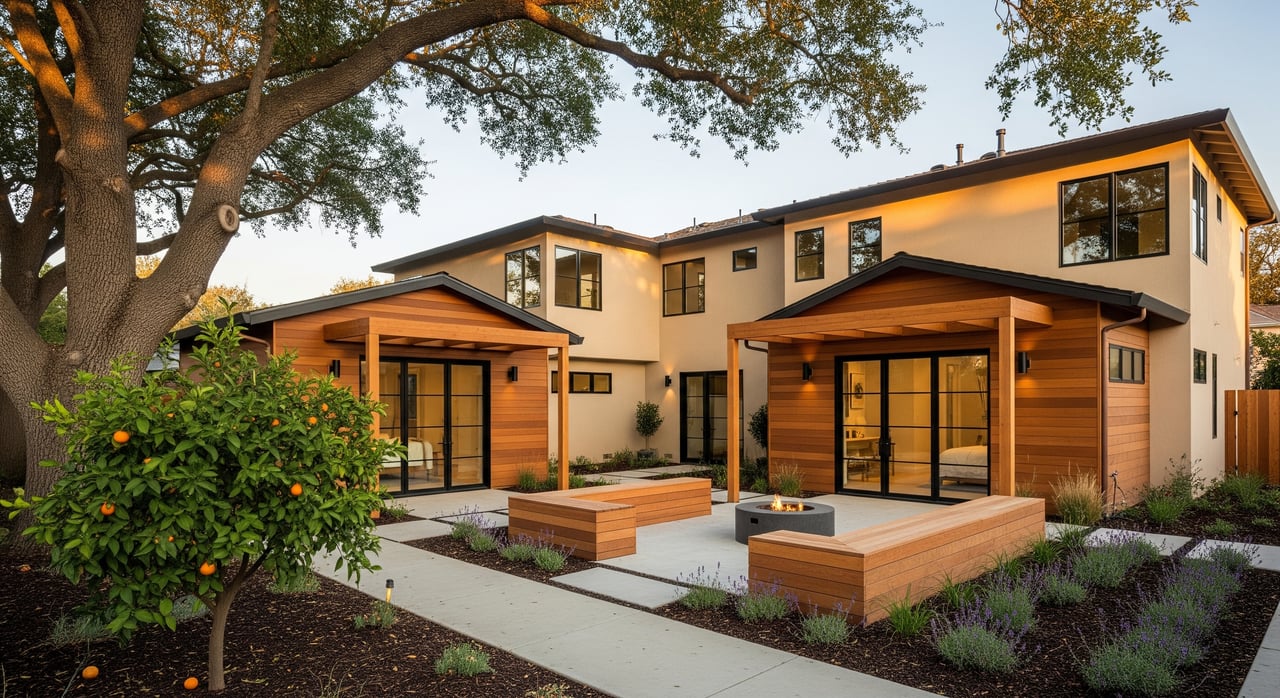
House Hacking in Citrus Heights for Duplex & ADU Income
December 25, 2025
December 25, 2025
Thinking about lowering your monthly payment without giving up your dream of homeownership? House hacking can help you do both by turning part of your property into income. In Citrus Heights, two paths stand out: buying a duplex or adding an accessory dwelling unit (ADU). Each option has its own rules, costs, and timelines, and the right choice depends on your goals and property. In this guide, you’ll learn how duplexes and ADUs work here, what to check with the city, how financing often looks, and a clear step-by-step plan. Let’s dive in.
House hacking means you live in one part of a property and rent out the other to offset your mortgage and expenses. In Citrus Heights, you’ll usually consider:
Duplexes are designed as two-unit properties from the start. ADUs are subordinate to a primary home and follow California ADU laws plus Citrus Heights’ objective local standards.
Whether a duplex is allowed depends on zoning. Citrus Heights has a city zoning map and code that governs which zones allow two-unit properties. If a parcel is in a zone that permits multifamily, a duplex may be allowed outright. In single-family zones, options can be more limited unless another program applies. Always confirm the parcel’s zoning and use permissions with the City of Citrus Heights Planning Division.
Many buyers use mainstream owner-occupant loans for two-unit properties if they live in one unit. FHA allows financing for 2–4 unit properties for owner-occupants. Conventional and portfolio loans also finance duplexes, but down payment and underwriting vary by lender and product. If you plan to use a duplex purely as an investment and not occupy it, expect different terms and higher requirements.
California state law encourages ADUs and limits many local barriers. Cities like Citrus Heights must process ADU permits ministerially and apply only objective standards such as size, setbacks, and height. Local guidance explains what fits on your lot, how close you can build to property lines, and whether design standards apply. In most cases, owner-occupancy requirements are limited by state rules, but always confirm current policies with the city.
ADU applications are reviewed ministerially, with state timelines guiding decisions once your application is complete. You should plan for plan check, inspections, and standard building department steps. Fees typically include plan review, permits, and possible impact or connection fees. Some fees may be reduced or limited for certain ADU types, especially conversions of existing space. Utility providers may require new or separate connections and meters depending on your project.
Common options include construction-to-permanent loans, renovation loans, HELOCs, and cash-out refinances. Some buyers fold ADU construction into a purchase-plus-renovation product. Program availability changes, so check current options with lenders familiar with ADUs. Your insurance will also need an update to reflect the new rental unit and liability needs.
SB 9 creates a separate pathway that can allow ministerial lot splits and up to two units on lots previously zoned for a single home, subject to objective standards and exclusions. This is different from ADU rules and requires careful review with the City of Citrus Heights. If you are exploring a lot split or duplex via SB 9, start with a zoning and site review.
Your numbers will depend on build type, size, site constraints, utility needs, and current labor and materials. Detached ADUs often cost more than a garage conversion. For income projections, compare local rental comps for similar units and factor in vacancy, maintenance, insurance, management, and reserves. Keep in mind that adding living space can affect assessed value. It is best to contact the Sacramento County Assessor for property tax implications and consult a CPA on rental income, depreciation, and deductions.
California has statewide tenant protections that limit rent increases and set just-cause standards for many rentals. Exemptions apply in some cases, and local rules may vary. You must provide habitable housing that meets building and safety codes. Before you lease a unit, confirm which laws apply to your duplex or ADU and set up compliant rental agreements.
ADU permit reviews are ministerial and follow state timelines once your application is complete. Actual timing depends on the completeness of your plans and the city’s workload. Construction can range from a few months for a conversion to longer for a new detached unit that requires utility extensions and site work. Duplex renovations or new builds follow similar patterns, driven by scope and contractor availability.
If you want to house hack in Citrus Heights, you need a clear plan, property-specific zoning guidance, and the right financing strategy. Our team helps you identify duplex listings, evaluate lots that are ADU-friendly, and coordinate next steps with lenders, designers, and the City so you move forward with confidence. When you are ready to explore properties or map out an ADU plan, reach out to Sankaran and Associates, Inc for a friendly, pressure-free consult.
When you meet us, you’ll also learn that we’re your neighbors. You can rest assured that your success is the priority every step of the way. Give us a call so we can get to know you and your needs.
950 Reserve Dr Ste 110 Roseville, CA 95678 JASMINE SUNKARA | CA DRE# 1855557