Acreage Or Subdivision Living In Loomis And Rocklin?
May 28, 2026
May 28, 2026
If you are torn between a home with elbow room and a home in a more structured neighborhood, you are not alone. Many buyers looking in Placer County end up comparing Loomis acreage to Rocklin subdivision living because both offer appealing lifestyles, just in very different ways. The good news is that the choice usually becomes clearer once you match the property type to your daily routine, maintenance comfort, and privacy goals. Let’s dive in.
Loomis and Rocklin sit close to each other, but they feel very different on the ground. Loomis is shaped by a semi-rural identity with large residential lots, agricultural activity, rural roads and trails, open space, and a compact downtown. Rocklin is more suburban in its layout, with master-planned neighborhoods, parks, and a more managed development pattern.
The population and density numbers help show that contrast. In the 2020 Census, Loomis had 6,836 residents and 940.8 people per square mile, while Rocklin had 71,601 residents and 3,614.4 people per square mile. In simple terms, Loomis usually feels more spacious, while Rocklin generally feels more neighborhood-oriented.
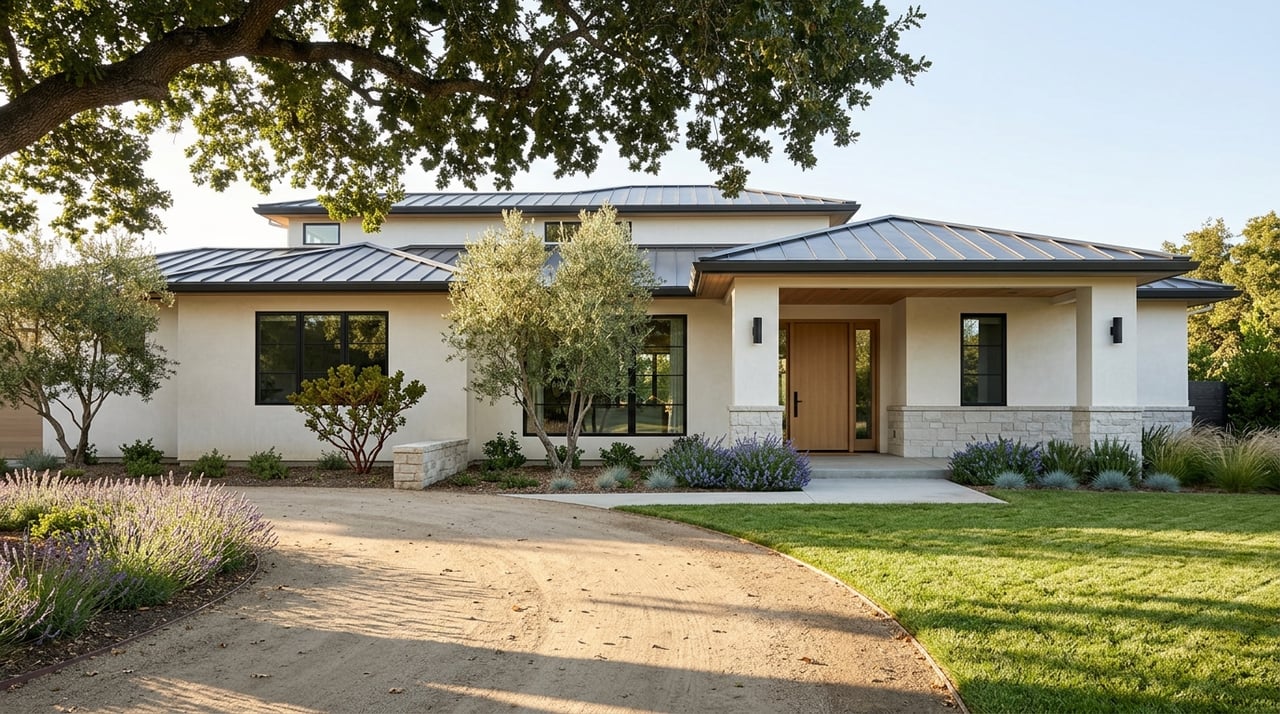
Loomis is a strong fit if you picture more separation between homes, more outdoor space, and a semi-rural setting. The Town of Loomis describes itself as a small semi-rural community with large residential lots, continuing agricultural activity, rural roads and trails, historic structures, creeks and riparian areas, and extensive open space.
That character is backed up by the town’s land-use designations. Residential Agricultural allows about 1 home per 4.6 acres, Residential Estate allows about 1 home per 2.3 acres, and Rural Residential allows about 1 home per acre. Those standards help explain why many buyers view Loomis as the privacy-first option in this part of Placer County.
If privacy is high on your list, Loomis stands out. The town’s general plan says residential uses are intended to remain visually subordinate to the open feeling and semi-rural countryside. That is a big reason acreage properties in Loomis often feel tucked away and spacious.
For some buyers, that extra breathing room is the whole point. You may have room for gardens, outdoor projects, or simply more distance from neighboring homes. The setting can feel calmer and less uniform than a typical subdivision layout.
More land usually comes with more responsibility. In Loomis, where agricultural uses such as orchards, vineyards, and cattle grazing are supported in parts of town, acreage living often means more exterior maintenance and more land management than you would expect on a smaller lot.
That does not mean every property will require the same level of work. Loomis is not one-size-fits-all, and parcel type matters. Still, if you love the idea of space, it is smart to be honest with yourself about how much upkeep you want to take on.
One of the most helpful things for buyers to understand is that Loomis has distinct sub-areas. Interstate 80 bisects the town, and the character changes depending on which side you are on.
North of the freeway, Loomis includes retail, office, industrial, and higher-density residential uses. South of the freeway is described as almost exclusively rural and residential. So when someone says they want to live in Loomis, the next question should be: what kind of Loomis experience are you after?
If you want a more structured neighborhood setting, Rocklin is often the clearest choice. The city’s planning framework shows that nearly all undeveloped areas have already been master-planned through planned unit developments or general development plans.
That matters because it creates a more predictable development pattern. Rather than a semi-rural patchwork of large parcels, Rocklin tends to offer more defined neighborhoods, shared amenities, and a layout that feels intentionally organized.
Rocklin is now focused more on infill and mixed-use decisions as it nears the edge of its planning area. For buyers, that reinforces the idea that Rocklin functions as a mature suburban city rather than a large-parcel rural community.
This kind of environment can feel easier to understand when you are house hunting. Street patterns, neighborhood layouts, and nearby services are often more consistent. If you like knowing what the surrounding area is likely to feel like, Rocklin may be a better fit.
Rocklin’s open-space plan adds another layer to the subdivision lifestyle. The city says it has taken a leading role in preserving open-space corridors, encourages neighborhood parks near public facilities where possible, and supports developers who dedicate and build parks as part of new projects.
The city also sets a standard of 5 acres of parkland per 1,000 residents. For buyers, that points to a community design where shared parks and open spaces are part of the neighborhood experience. You may give up lot size, but you often gain access to planned amenities nearby.
For many buyers, Rocklin’s biggest advantage is simplicity. A smaller lot and more traditional suburban layout often mean less exterior upkeep compared with acreage property.
If your weekends are already full, or if you simply do not want to manage a large parcel, that can be a major plus. Rocklin tends to work well for buyers who want a neighborhood setting with convenience and a lower-maintenance feel.
Many buyers assume acreage automatically means a much harder commute, but the data here tells a more balanced story. Mean travel time to work is 24.2 minutes in Loomis and 26.1 minutes in Rocklin.
That is a relatively small gap. In real life, your exact destination and access to major routes may matter more than the city name alone. It is worth comparing specific properties based on where you need to go most often.
Sometimes it helps to place Loomis and Rocklin on a broader local spectrum. Granite Bay and Roseville offer useful comparison points if you are still sorting out your priorities.
Granite Bay often feels like the in-between option. Placer County describes it as a community with a mix of suburban and rural-residential parcel sizes and limited commercial districts, all within a plan designed to preserve its character and independent identity.
That mix makes Granite Bay a natural middle ground for buyers who want some lot privacy without going fully into a semi-rural acreage setting. Its mean travel time to work is 25.3 minutes, which is also in the same general range as Loomis and Rocklin.
Roseville is the most citylike option in this comparison. In the 2020 Census, Roseville had 147,773 residents and 3,352.5 people per square mile, and it also posted much larger retail sales than Loomis or Rocklin.
That helps explain why Roseville often feels like the convenience-oriented choice. If your priority is being close to a broader retail and service base, Roseville is often the strongest fit. Its mean travel time to work is 27.3 minutes.
Acreage versus subdivision living is really a lifestyle question. The home itself matters, but the land, neighborhood pattern, and daily maintenance needs can shape your experience just as much.
Here is a simple way to think through the decision:
Before you narrow your search, take a minute to think about how you actually want to live day to day. These questions can save you time and help you focus on the right homes.
There is no one-size-fits-all winner between acreage in Loomis and subdivision living in Rocklin. Loomis usually stands out for buyers who want privacy, open space, and a semi-rural environment. Rocklin usually stands out for buyers who want a more predictable neighborhood setting, planned parks, and easier upkeep.
The best move is to match the property to your actual routine, not just your first impression. If you want help comparing specific homes, neighborhoods, and lifestyle tradeoffs across Loomis, Rocklin, Granite Bay, and nearby communities, Sankaran and Associates, Inc can help you narrow in on the right fit.
When you meet us, you’ll also learn that we’re your neighbors. You can rest assured that your success is the priority every step of the way. Give us a call so we can get to know you and your needs.
950 Reserve Dr Ste 110 Roseville, CA 95678 JASMINE SUNKARA | CA DRE# 1855557